A VPN concentrator is a network device or software system designed to create, terminate and manage a large number of VPN connections from one central point. Instead of configuring separate VPN infrastructure for every employee, branch office or remote device, an organization can send those connections to a concentrator that handles authentication, encryption and access to the private network.
The concept is most common in business and enterprise networking. A company with hundreds or thousands of remote users may need many encrypted VPN tunnels active at the same time, each with its own session, permissions and cryptographic state. A VPN concentrator provides the infrastructure needed to manage those connections efficiently.
Modern products do not always use the name “VPN concentrator.” The same role may be performed by a VPN gateway, security appliance, next-generation firewall or cloud-based remote-access platform. The underlying idea remains the same: many VPN tunnels terminate at one controlled point before traffic enters the protected network.
What is a VPN concentrator?
A VPN concentrator is a centralized VPN endpoint built to handle many encrypted connections simultaneously. It accepts incoming VPN sessions, authenticates users or devices, establishes the required cryptographic keys and then routes permitted traffic into another network.
For a remote employee, the concentrator may be the system on the other end of a corporate VPN application. The employee connects from home, the VPN tunnel travels across the public internet, and the concentrator terminates that tunnel before allowing the user to reach internal services.
The device may also manage site-to-site VPNs connecting entire offices rather than individual users. In that configuration, several networks can communicate securely through tunnels that terminate on the same central infrastructure.
A VPN concentrator is therefore not simply a device that “passes VPN traffic through.” It is one of the VPN endpoints and actively participates in establishing and protecting the connection.
How does a VPN concentrator work?
A VPN concentrator sits between remote VPN users or networks and the resources they are allowed to access. When a new connection arrives, the concentrator first needs to determine whether the client is authorized to create a tunnel.
Authentication can involve usernames and passwords, certificates, multi-factor authentication or integrations with a company's identity system. After the client is authenticated, the VPN protocol establishes the cryptographic information required to protect the session.
Protocols based on IPsec commonly use IKE to negotiate these security parameters. The IKEv2 specification in RFC 7296describes how peers authenticate and establish security associations before protected IPsec traffic begins to flow.
Once the connection is established, encrypted packets arriving from the remote client are processed by the concentrator. It verifies and decrypts the protected traffic, applies the organization's routing and access policies, and forwards permitted packets toward internal resources.
Replies follow the opposite path. The concentrator takes traffic returning from the private network, protects it using the active VPN session and sends it back through the encrypted tunnel to the remote user.
What does a VPN concentrator do?
The main job of a VPN concentrator is tunnel management. A large organization may have many VPN sessions active at the same time, and each connection requires its own cryptographic keys, routing state and authentication information.
The concentrator keeps track of those sessions and determines which traffic belongs to which tunnel. It also performs the encryption and decryption required at the VPN endpoint, which can involve substantial processing when many users are transferring data simultaneously.
Access control is another important part of the system. A successful VPN login does not necessarily mean that every user should be able to reach every internal resource. The concentrator can work with network policies that restrict users to the systems appropriate for their role.
A concentrator may also maintain connection logs and operational information that administrators use to monitor remote access. Depending on the platform, additional security functions may be integrated directly into the same appliance or handled by other systems elsewhere in the network.
Why is it called a concentrator?
The name describes what the device does with VPN connections. Instead of each tunnel terminating at a different system, many connections are concentrated at one central endpoint.
Imagine hundreds of employees working remotely. Their devices may be spread across different networks, but their VPN tunnels can all converge on the same concentrator before entering the corporate environment.
This centralization makes VPN infrastructure easier to control because administrators can manage authentication, routing and security policies from a common point rather than maintaining independent VPN endpoints for every user.
It also creates an important infrastructure requirement. If large numbers of users depend on the same concentrator, the system needs enough processing capacity and network bandwidth to handle all of those tunnels without becoming a bottleneck.
VPN concentrator vs VPN server
A VPN concentrator and a VPN server can perform similar functions, and the terms sometimes overlap. The difference is usually one of scale and design.
A VPN server can be any system that accepts VPN connections. It might be a software service running on a general-purpose server, a small gateway used by a handful of users or even a self-hosted VPN running on a virtual machine.
A VPN concentrator is specifically designed around terminating and managing many VPN connections. It usually emphasizes high tunnel capacity, centralized authentication and predictable performance under larger workloads.
The distinction is therefore not that one creates VPN tunnels and the other does not. Both can terminate VPN connections. “Concentrator” generally implies that handling large numbers of tunnels is one of the system's primary roles.
VPN concentrator vs VPN gateway
VPN gateway and VPN concentrator describe closely related functions, and in many enterprise deployments the same system can be both. A VPN gateway is defined mainly by its position in the network: it provides an entry or exit point between VPN connections and another network. A concentrator emphasizes the ability to terminate and manage many VPN tunnels from a centralized endpoint.
A large corporate security appliance may therefore act as a gateway between remote employees and the private network while simultaneously functioning as a concentrator for hundreds or thousands of VPN sessions. Modern vendors increasingly use terms such as VPN gateway or remote-access gateway instead of concentrator, which is why the older term appears less often in current product interfaces even though the underlying function remains common.
VPN concentrator vs VPN router
A VPN router and a VPN concentrator can both establish encrypted tunnels, but they are designed for different network roles.
A VPN router primarily routes traffic between networks while also supporting VPN functionality. A home or small-business router, for example, may establish a VPN connection and send traffic from devices behind it through that tunnel.
A concentrator is optimized around managing VPN sessions themselves. It may terminate large numbers of remote-access connections while providing authentication, policy enforcement and access to an internal network.
The difference becomes clearer when considering scale. A router may create a few tunnels as one of many networking features, while a concentrator is intended to make large-scale VPN connectivity one of its central functions.
VPN concentrator vs VPN passthrough
VPN passthrough and a VPN concentrator interact with VPN traffic in fundamentally different ways. A router using passthrough allows a VPN connection created by another device to cross NAT or firewall boundaries without becoming an endpoint of that connection. The VPN tunnel remains established between the client and a remote VPN server or gateway, while the router simply helps the traffic move through the local network.
A VPN concentrator performs the opposite role because the tunnel ends on the concentrator itself. It participates directly in authentication, cryptographic processing and routing before traffic is allowed into the protected network. A router can therefore support VPN passthrough without having any of the capabilities required to operate as a VPN concentrator.
VPN concentrator vs firewall
A firewall decides which traffic is allowed to move between networks, while a VPN concentrator manages encrypted VPN connections. These responsibilities are different, although modern security appliances often combine them.
A traditional concentrator may terminate the VPN tunnel and then send the decrypted traffic toward a firewall that applies additional network security rules. In an integrated platform, both functions can happen on the same device.
Combining them can simplify infrastructure, but the conceptual difference still matters. VPN functionality determines how remote traffic securely reaches the network, while firewall functionality determines what that traffic is permitted to do once it gets there.
What types of VPN connections can a concentrator handle?
VPN concentrators can support remote-access connections, site-to-site connections or both, depending on the platform.
A remote-access VPN connects an individual user's device to the organization's network. This is common when employees work outside the office and need access to internal applications.
A site-to-site VPN connects networks rather than individual devices. Two offices can establish an encrypted connection between their gateways so that systems on either side can communicate through the protected route.
The IPsec architecture explicitly supports protected connections involving hosts and security gateways, which makes it suitable for both remote-access and site-to-site network designs.
Which VPN protocols do concentrators use?
The available protocols depend on the concentrator or security platform. IPsec remains common in enterprise environments, particularly for site-to-site connectivity and some forms of remote access.
IKEv2/IPsec can provide secure tunnel establishment while supporting features that are useful when client connectivity changes. The IKEv2 protocol handles authentication and security negotiation, while IPsec protects the network traffic carried after the tunnel is established.
OpenVPN can also serve as the basis for centralized VPN infrastructure. The OpenVPN documentation describes deployments in which a central server accepts VPN client connections and routes traffic between VPN participants and other networks.
WireGuard can be used in centralized network architectures as well, although it uses a different peer-based design. Its protocol documentation describes the handshake and encrypted transport used between WireGuard peers.
The best protocol depends on the organization's infrastructure, client requirements and security design rather than on whether the system is described specifically as a concentrator.
What is VPN tunnel termination?
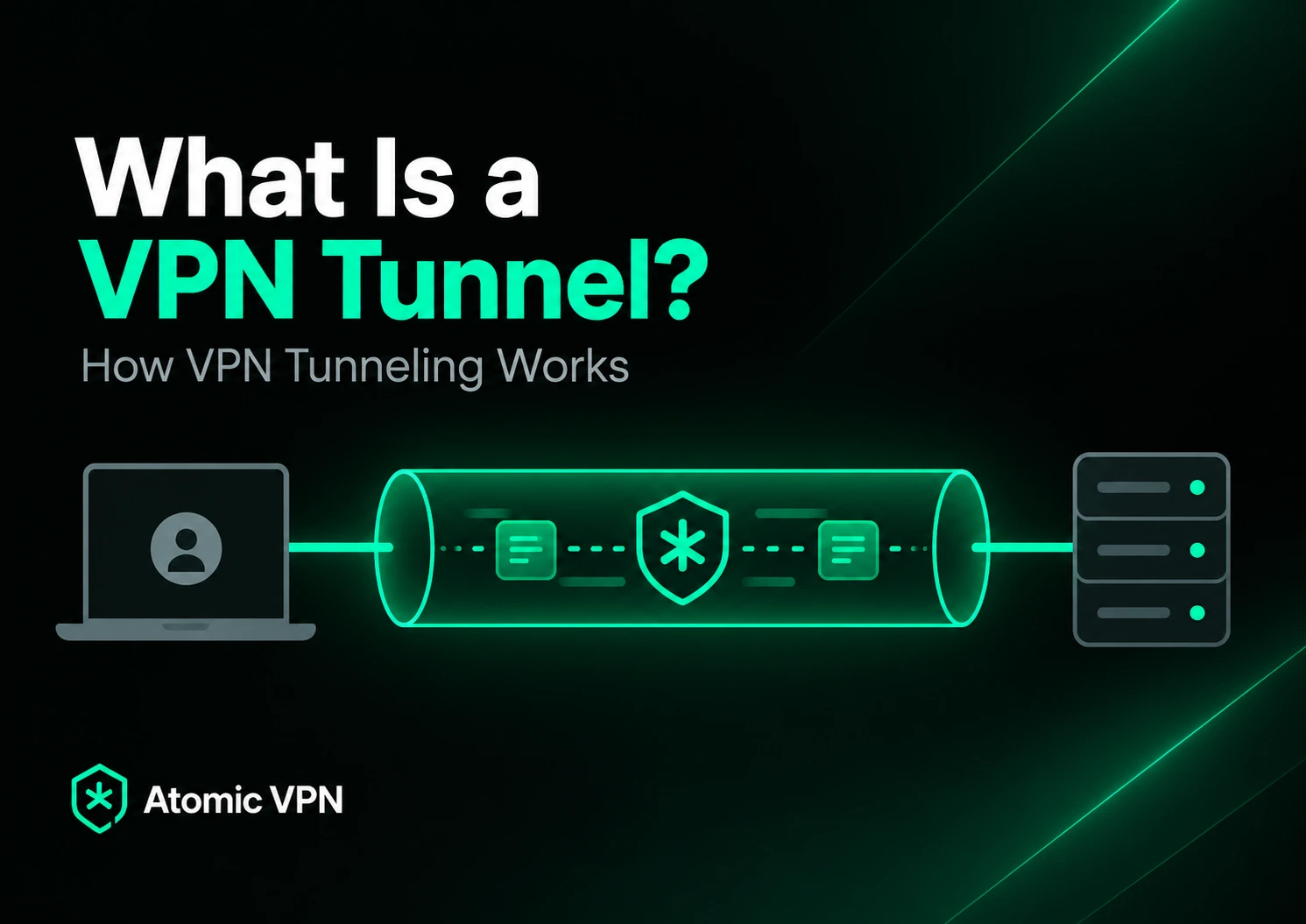
VPN tunnel termination describes the point where the protected VPN connection ends and the traffic carried inside it becomes available for normal routing. While packets travel between the VPN client and the concentrator, they remain protected by the VPN protocol. When they reach the concentrator, the system authenticates and processes the session, removes the VPN protection where appropriate and forwards the underlying traffic according to the organization’s routing and access rules.
The application request itself does not necessarily end at the concentrator. Only the VPN tunnel terminates there, while the original traffic can continue toward an internal application, server or another permitted destination. This is central to understanding what a VPN concentrator does: it is not simply forwarding encrypted packets unchanged, but acting as the endpoint that receives, processes and routes the traffic carried inside many VPN tunnels.
How does a VPN concentrator authenticate users?
Authentication determines who or what is allowed to establish a VPN session. The exact method varies considerably between organizations.
A concentrator may authenticate against a local user database or connect to a centralized identity service. Larger deployments often combine account credentials with certificates or multi-factor authentication so that possessing a password alone is not enough to establish remote access.
The concentrator can also receive information about the authenticated user and use it when applying network policy. Two users connected to the same VPN infrastructure may therefore receive different access depending on their role.
Authentication is separate from encryption. Encryption protects the connection, while authentication establishes which user or device should be allowed to create that connection in the first place.
How many connections can a VPN concentrator handle?
There is no single number because capacity depends on the hardware, software, VPN protocol and traffic patterns involved.
The maximum number of configured users is also not necessarily the same as the number of useful simultaneous connections. A system may technically accept many tunnels but still run into limits caused by cryptographic processing, memory or available network bandwidth.
Traffic volume matters as much as tunnel count. A thousand mostly idle VPN sessions can require very different resources from a smaller number of users transferring large files or accessing bandwidth-intensive applications.
For this reason, enterprise concentrators are normally sized according to simultaneous users and expected encrypted throughput rather than tunnel count alone.
Does a VPN concentrator improve security?
A concentrator can strengthen remote-access security by providing one controlled place for authentication, encryption and policy enforcement. Administrators can define how users connect and which resources become available after authentication.
Centralization also makes it easier to update VPN settings consistently. Instead of maintaining separate configurations across many independent VPN endpoints, security teams can manage access through shared infrastructure.
A concentrator is not automatically secure simply because it centralizes VPN traffic. It becomes a valuable target because it sits at the boundary between external users and protected systems.
Keeping its software updated, restricting administrative access and using strong authentication therefore remain important parts of the security model.
Can a VPN concentrator become a bottleneck?
Yes. Because many VPN sessions converge on the same system, the concentrator can become a performance bottleneck if it does not have enough capacity.
Encryption and decryption require processing resources, while all tunneled traffic also consumes network bandwidth. If either limit is reached, users may experience slower connections even when their own internet service is performing normally.
The geographic location of the concentrator can affect latency as well. A user far from the corporate VPN endpoint may need to send traffic across a long route before it can reach internal services.
Large organizations can address these problems with multiple concentrators, regional gateways or distributed cloud infrastructure rather than forcing all remote traffic through a single physical location.
What happens if a VPN concentrator fails?
If every remote VPN connection terminates on one concentrator, failure of that device can disconnect many users simultaneously. This makes availability an important consideration for enterprise deployments.
Organizations can deploy redundant concentrators or gateways so another system can accept connections if the primary one becomes unavailable. Some architectures can also distribute VPN sessions across multiple endpoints instead of relying on one device.
The exact failover design depends on the platform, but the objective is the same: the central VPN endpoint should not become a single point of failure for everyone who needs remote access.
Is a VPN concentrator the same as a load balancer?
No. A load balancer distributes connections or requests between multiple systems, while a VPN concentrator terminates and manages VPN tunnels.
The two can exist in the same architecture. A large deployment may distribute incoming VPN users across several gateways or concentrators to improve scalability and availability.
That does not turn the load balancer into the VPN endpoint. The concentrators still need to establish and maintain the protected sessions unless the particular architecture places VPN termination somewhere else.
Hardware vs virtual VPN concentrators
VPN concentrators were traditionally associated with dedicated physical appliances installed in company data centers. The hardware was designed to handle large amounts of encrypted VPN traffic and provide predictable performance.
The same function can now be delivered through virtual appliances or cloud infrastructure. Instead of installing a dedicated box, an organization can operate a virtual VPN gateway alongside other network services.
The architecture changes, but the core role does not. Remote tunnels still converge on infrastructure that authenticates clients, terminates encrypted sessions and routes authorized traffic toward protected resources.
This is another reason the term VPN concentrator can feel older than the technology it describes. The dedicated appliance may disappear, while the concentration and termination of VPN sessions continue as software.
Do companies still use VPN concentrators?
VPN concentrators are still widely used in enterprise networking, although modern products do not always use that term. Organizations continue to need centralized infrastructure that can authenticate remote users, terminate encrypted VPN tunnels and provide controlled access to internal systems. Today, those functions are often packaged into products described as VPN gateways, remote-access gateways or broader secure-access platforms.
Enterprise access architecture is also becoming more granular. Technologies such as Zero Trust Network Access can give users access to specific applications instead of extending broad network access through a traditional remote-access VPN. This does not eliminate the role of VPN concentrators, but it does mean that centralized VPN termination now exists alongside other approaches to remote access rather than serving as the default solution for every organization.
Do home users need a VPN concentrator?
Home users generally do not need a VPN concentrator because the infrastructure it provides is designed for organizations managing large numbers of VPN connections. For personal use, a VPN application or a router with VPN support is usually enough. The consumer VPN provider operates the server-side infrastructure, while the user only needs to establish a connection from a phone, computer or router.
When you connect through a service such as Atomic VPN, the application handles the client side of the tunnel and the provider manages the infrastructure that accepts and processes the connection. There is no need to administer tunnel termination, authentication systems or enterprise access policies at home. A VPN concentrator becomes useful when an organization needs to control a centralized VPN endpoint for many employees, devices or entire networks.
VPN concentrator vs consumer VPN service
A VPN concentrator is infrastructure. A consumer VPN service is a product that gives individual users access to VPN infrastructure without requiring them to operate it.
With a consumer VPN, the provider manages the servers, networking and much of the technical configuration behind the service. The user interacts mainly with an application that creates a tunnel to that infrastructure.
An enterprise concentrator reverses that responsibility. The organization itself controls the VPN endpoint, determines who may connect and decides which internal resources become available after authentication.
The underlying concept of an encrypted tunnel is similar, but the operational goals are different. Consumer VPNs are generally designed around internet privacy and location selection, while corporate concentrators are primarily designed around controlled access to organizational networks.
When do you need a VPN concentrator?
A VPN concentrator makes sense when an organization needs to operate many VPN connections through centralized infrastructure.
A company with a substantial remote workforce may use one to provide employees with encrypted access to internal systems. Organizations with multiple offices can also use centralized VPN infrastructure to maintain protected connections between locations.
The requirement is therefore driven by scale and control rather than by VPN use alone. Someone who simply wants to protect a laptop on public Wi-Fi does not need a concentrator, while an organization managing hundreds of remote users may benefit significantly from centralized VPN termination.
What a VPN concentrator does in simple terms
A VPN concentrator is the central endpoint where many VPN tunnels meet. It authenticates incoming clients, establishes encrypted sessions and processes protected traffic before allowing it to reach permitted parts of another network.
The technology is most useful in business environments where large numbers of users or sites need secure remote connectivity. Modern firewalls and cloud gateways may perform the same job without using “VPN concentrator” in the product name.
For an individual VPN user, the important distinction is simpler. Your VPN application creates the client side of a tunnel, while infrastructure on the other side has to terminate and process that connection. A VPN concentrator is one way organizations can provide that infrastructure at scale.